Can This 100-Year-Old Home Become a Profitable Investment?
Inside an off-market real estate investing decision: the Gallos walk a century-old house on West Park Avenue, weigh single-family against duplex, and start running the numbers before someone else makes an offer.
▷ Watch Episode 01Key Takeaways
- This is an off-market investment property on West Park Avenue in Greenville, SC — no public listing, so the Gallos had to move fast.
- The home was originally built as a duplex, but an awkward floor plan made single-family the stronger investment than converting it back to two units.
- The renovation scope includes relocating the kitchen, adding a second bathroom, a full replumb, and an electrical rewire.
- A comparable home on the same street received multiple offers in a single day and sold significantly over the asking price — a live ARV data point for this deal.
- Episode 1 ends with the Gallos ready to move forward on an offer; Episode 2 picks up with financing and underwriting.
The Series
A Day in the Deal
"While some investors chase the quick flip, we play the long game."
Anthony F. Gallo III and Anna D. Gallo buy, renovate, and manage homes across Greenville, South Carolina — and in this series they open up a deal in real time. Episode 1 follows the first look at an off-market investment property just off West Park Avenue: a hundred-year-old single-family home with good bones, a short list of serious problems, and a neighbor's house that received multiple offers in a single day and sold significantly over the asking price. Off-market real estate investing rewards people who can read a property fast — this episode is that read, start to finish.
The Walkthrough
The house sits on West Park Avenue, in one of the more walkable pockets near downtown Greenville — a hundred years old, with original windows Anthony doesn't think they'll even need to replace, mature trees out back, and a small creek running along the property line. "This would be an awesome amenity to have near downtown," Anthony notes, and Anna agrees the setting is the easy part of this deal.
"Home sweet home... this is really cozy."
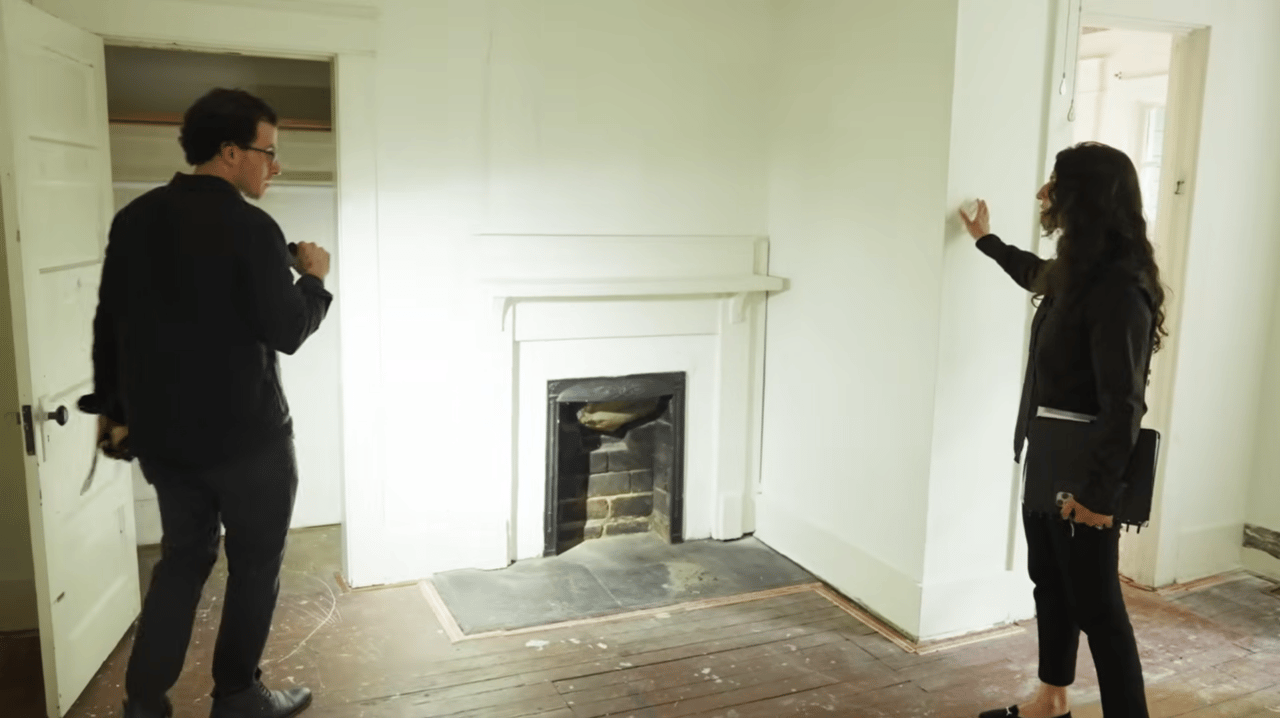
The kitchen is the first real problem: too small to work as-is, with no obvious way to expand it in place. Deeper into the house, the layout gets stranger — a second exterior entrance, an oddly placed sitting area, and a fireplace tucked next to what used to be a second unit's private space. It becomes clear fast: this home wasn't always a single-family house.
Explore the East Park Avenue neighborhood, or read why invest in downtown Greenville.
Single-Family or Duplex?
Every clue in the floor plan points to a property that was originally configured as a duplex: a second fireplace, an awkward vanity space added after the fact, and a bedroom with "a lot of windows — great for natural light, not great for wall space." The single-family vs. duplex investment decision comes down to one question: can two units actually fit in this footprint?
Anthony and Anna walk it through together and land on the same read — the layout doesn't cooperate. Fitting two kitchens and two full bathrooms into the existing shape would mean a significant redesign, moving walls, and losing the parts of the house that make it charming in the first place. A single-family renovation keeps the character intact and avoids paying twice for the same problem areas.
"I don't know if I can foresee us being able to fit two units in here... I just don't think the layout's going to work."
The Renovation Scope
Once single-family is the plan, the to-do list gets specific fast. The kitchen needs to move to the side of the house with better natural light, with the dishwasher built into a new island and the refrigerator relocated to make room for a full run of appliances. The single bathroom in the house today isn't close to enough — the plan calls for at least two, which means replumbing on top of a full kitchen relocation.
- Kitchen relocation
- Add a second bathroom
- Full replumb
- Electrical rewire
- Yard + creek cleanup
Three-prong outlets throughout the house are a tell that the wiring hasn't been touched in decades, so the budget assumes a full rewire rather than a patch job. It's a long list — but as Anthony points out, most of it (replumbing the kitchen, upgrading the panel) was already unavoidable once the kitchen had to move.
For a look at another renovation on the same street, read the 114 W Park Ave story.
The Numbers
Because this is an off-market investment property, the Gallos don't have the luxury of a slow decision. A comparable house on the same street received multiple offers in a single day and sold significantly over the asking price — a strong, current data point for the ARV (after-repair value) on this deal. Rather than guessing, Anthony leans on recent same-street sales as his own version of an ARV calculator: what similar renovated homes on this exact block are actually closing for, right now.
With a purchase price in mind and ARV holding up against the comps, the math points toward moving quickly on an offer — before the window on an off-market deal like this one closes. The next step is turning that instinct into a real budget with a lender, which is exactly where Episode 2 picks up.
Curious how ARV and other investing terms work? See our glossary of common real estate terms.
Questions from this episode
Should an off-market investment property stay single-family or become a duplex?
It depends on the existing floor plan more than the label on the deed. On this West Park Avenue property, the home was originally configured as a duplex, but an awkward layout, limited wall space, and the cost of duplicating a kitchen and bathrooms made a single-family conversion the more advantageous single-family vs. duplex investment relative to the renovation cost.
What is ARV (after-repair value) in real estate investing?
ARV, or after-repair value, is the estimated market value of a property once renovations are complete. Investors weigh it against purchase price and renovation budget to decide whether a deal pencils out — comparing ARV to nearby comparable sales, like a recently sold home on the same street, is one of the fastest real-world ARV calculator checks before making an offer.
Why move quickly on an off-market real estate investing opportunity?
Off-market properties don't have public listing data driving competing offers — but the neighborhood still does. When a comparable home on the same street receives multiple offers in a single day and sells significantly over the asking price, it's a signal that demand is strong and that hesitating on a well-priced off-market deal can mean losing it to a buyer who moves first.
Full Transcript & Episode Chapters
Jump to any moment in the video, or read along below. Chapters and timestamps match the full transcript published on Investology.
Featured This Episode
Anthony F. Gallo III
Anna D. Gallo
Explore East Park Avenue & Greenville Investing
A few places to go deeper on this neighborhood and how the Gallos evaluate deals like this one.
East Park Avenue
View the area → Case Study114 W Park Ave: A Renovation Story
Read the story → InvestingWhy Invest in Downtown Greenville
Read more → GlossaryCommon Real Estate Terms Explained
Look up a term → Next EpisodeEpisode 2: Making the Offer, Budget Review & Project Funding
Watch Episode 02 →Have an Off-Market Deal in Mind?
The Gallo Company works with investors and homeowners across Greenville on exactly this kind of project, from first walkthrough to final draw.