Making the Offer, Budget Review & Project Funding
Anthony and Anna turn a West Park Avenue walkthrough into a real budget, review the numbers with their lender at Finance of America Commercial, and tour a four-unit rehab to see how a draw works — until a call from underwriting raises a new question.
▷ Watch Episode 02Key Takeaways
- The construction budget drives the loan: as the Gallos explain, the budget ultimately determines the value of the loan and whether the West Park Avenue project is feasible.
- After weighing the floor plan and the cost to make two units work, they lean single-family over a duplex for West Park Avenue.
- Preliminary numbers shared with their lender: a renovation budget of roughly one-third of the purchase price, including contingency, and a goal of 10 to 20 percent equity after the work.
- A reimbursement draw lets the Gallos recoup money already spent on renovation work, but the lender has to see the progress in person first, as Ronnie does at the four-unit Townes Street rehab (projected ARV roughly 30 percent above the all-in cost).
- The episode ends with a call from the lender: the West Park Avenue loan is getting push-back from underwriting.
The Series
A Day in the Deal
"While some investors chase the quick flip, we play the long game."
Anthony F. Gallo III and Anna D. Gallo buy, renovate, and manage homes in Greenville, South Carolina. In Episode 2, the West Park Avenue deal moves from walkthrough to paperwork: a construction budget, a meeting with their lender, and a tour of a four-unit rehab that shows how renovation funds are actually released.
Picking Up at West Park Avenue
Episode 2 picks up where Episode 1 left off: a 100-year-old West Park Avenue house with good bones, a long to-do list, and a need to move quickly. Missed the walkthrough? Start with Episode 1.
The Gallos weigh what they love — the windows, the greenery, the creek out back, and a walkable location near downtown — against what has to change: a second bathroom and a modernized kitchen. At around 1,250 square feet, the smaller footprint also suits a more entry-level rental price point. "I don't really see an obstacle here that we can't overcome," one of them says.
"We can make it really attractive for someone to live in."
Both say they are ready to move forward, with one condition: the numbers have to work. That means a detailed schedule, a conversation about what they are comfortable offering, and a call to their CPA.
A Progress Check at North Main
Before the budget, a look at what the Gallos' finished work looks like. At their North Main duplex, just north of downtown Greenville, they do a progress check, making sure the crown molding is complete and that nothing is evident that they are not already addressing. Then they see the tile. "This looks nicer than our house," one says, and the marble mosaic earns the compliment.
It is a long way from where the space started: everything was yellow, the windows were in disrepair, and glass was falling out. Today it reads as a beautiful space, and that reaction is the goal.
"When someone walks in and has that reaction of wow, that's when we feel like we won."
The design philosophy is creative but practical. Every design is meant to be unique, but as owners and managers the Gallos are "the first ones to hear" when a window will not close or a door will not latch, so putting in the extra dollars now means fewer calls later.
Explore the North Main neighborhood.
The Budget Call
Back at the table, the Gallos build the construction budget for West Park Avenue, a step that carries real weight. The budget ultimately determines the value of the loan, which drives whether the project is feasible and can move forward.
First, the question carried over from Episode 1: duplex or single-family? Based on the floor plan and the cost it would take to make two units work, they lean single-family. When Ronnie Cannucci of Finance of America Commercial sits down with them, the conversation lands in the same place: the home is currently single-family, was originally built as a duplex, and has a couple of fireplaces to work around, and keeping it single-family looks advantageous and fitting for the charm of the area.
The location raises one more question: is it in the historic district? It sits just on the edge, down the street from other projects the Gallos are working on. For a look at another renovation on the same street, read the 114 W Park Ave story.
The Numbers with Finance of America Commercial
Ronnie, an account rep who originates loans, makes the trip in person: "I like to meet my customers face to face." The Gallos describe working with him as transparent and very quick. His approach to investment property financing is simple: for any new project, it comes down to the numbers. What is the purchase price? What is the renovation budget? What is the after-repair value? He needs the ins and outs of the deal in order to fund it.
The Gallos' preliminary numbers put the renovation budget, including a contingency, at roughly one-third of the purchase price. Their rule of thumb: if they can walk away with 10 to 20 percent equity after the work, they are happy.
Ronnie's reaction: "I think it sounds exciting." He asks for a contract and a budget, and the Gallos will call to let the seller know an offer is coming. For more on making an offer when a market is moving, see how to make a winning offer in a competitive market.
On timing, the Gallos project six to nine months to rehab, then about a month to get the house rented. Ronnie notes the area leans toward primary residences with little rental competition, and the yard, with its mature trees and creek, makes the parcel about as desirable as it gets.

Townes Street: How a Reimbursement Draw Works
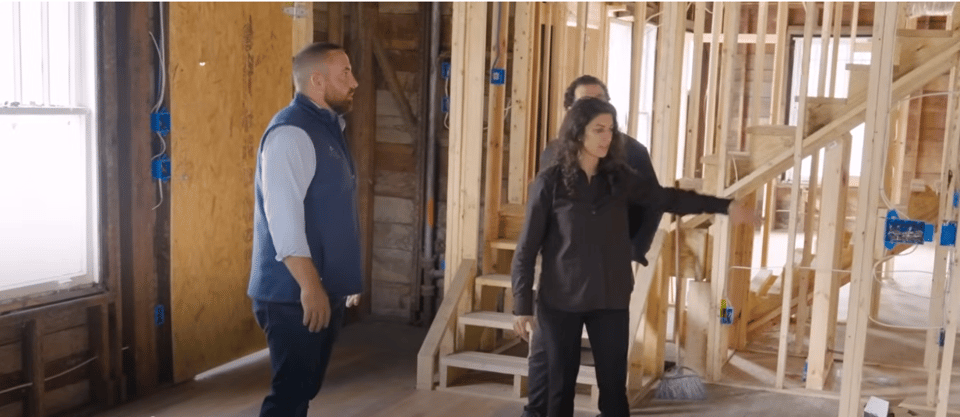
While Ronnie is in town, the Gallos mention they have just submitted a draw for Townes Street, and he heads over to see it. The Gallos have started work and now want to reimburse themselves for what they have spent. That is called a reimbursement draw, and before the funds are released, the lender has to get eyes on the property.
Townes Street is a four-unit rehab in a largely single-family residential neighborhood, which Ronnie calls "probably one of the biggest in Greenville, South Carolina right now." The Gallos bought it six years ago and held it before starting the renovation. The exterior brick facade was falling off, with flea infestation and crumbling foundations, issues they are better equipped to address now.
The Gallos do not plan to sell, but the projected ARV is roughly 30 percent above the all-in cost of purchase price plus renovation, and Ronnie says the deal makes sense. The tour ends in the basement unit, the largest footprint, with a walk-out to the backyard. The design challenge is making it feel airy, bright, and welcoming rather than like a basement.
"I think we're totally fine to release this draw."
The Call from Underwriting
Back at their desks, a call comes in from Ronnie. Anna puts him on speaker so Anthony can hear. The West Park Avenue project, he says, is in a really cool area and would fit right into the Gallos' portfolio. But he raises one concern: with so much already in motion, the loan is getting some push-back from underwriting.
It is a cliffhanger, and the question carries into the next episode: does West Park Avenue make it past underwriting?
Questions from this episode
What is a reimbursement draw?
A reimbursement draw lets a borrower recoup money they have already spent on completed renovation work. In this episode, the Gallos have started work on Townes Street and want to reimburse themselves, so before the funds are released, Ronnie Cannucci of Finance of America Commercial visits the property to see the progress in person. Once he is satisfied with the work, he approves the draw.
What does a lender need to see before funding an investment property loan?
In the episode, Ronnie says it comes down to the numbers: the purchase price, the renovation budget, and the after-repair value, so he can judge whether the deal is feasible. He also asks for a contract and a budget. For West Park Avenue, the Gallos share a renovation budget of roughly one-third of the purchase price, including contingency, alongside a goal of 10 to 20 percent equity after the work.
How does the renovation budget affect a rehab loan?
The budget drives the loan. As one of the Gallos explains in the episode, the construction budget ultimately determines the value of the loan, which in turn drives whether the project is feasible and can move forward. That is why the Gallos settle the single-family versus duplex question and finalize the scope before the lender reviews the numbers.
What is the difference between a hard money loan and a rehab loan?
"Hard money" describes the type of lender and loan structure, typically a short-term, asset-based loan from a private lender, while "rehab loan" describes the purpose: funding a purchase plus renovation, often marketed as a rehab loan or fix and flip loan. The two often overlap, and in both cases renovation funds are commonly released in stages, or draws, as work is completed. Terms vary by lender and deal, so investors should confirm the structure with their lender. In this episode, the Gallos work through their financing with Finance of America Commercial.
Full Transcript & Episode Chapters
Jump to any moment in the video, or read along below. Chapters and timestamps match the full transcript published on Investology.
Featured This Episode
Anthony F. Gallo III
Anna D. Gallo
Ronnie Cannucci
Explore North Main & Greenville Investing
Go deeper on the neighborhood, the deals, and the earlier episode behind this one.
Have an Investment Property in Mind?
The Gallo Company works with investors across Greenville, from the first walkthrough to the final draw.